Blogia
El cartapacio del alecrán

Películas completas / Buen cine

Anita, Síndrome de Down / película argentina
Anita, Síndrome de Down / película argentina


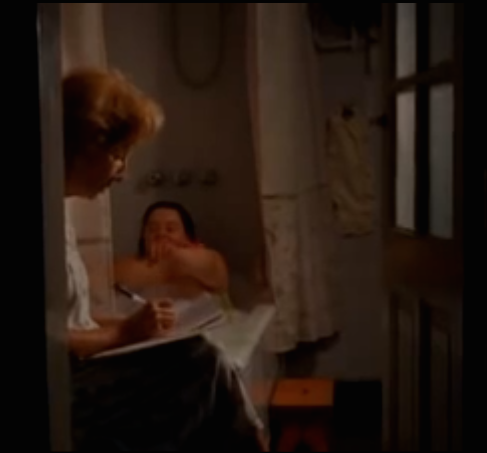
Anita (Alejandra Manzo) es una joven con síndrome de Down y vive con su madre (Norma Aleandro) en el barrio porteño de Once.

Cuando el 18 de julio de 1994 se produce el atentado a la AMIA, su vida cambia para siempre. Anita no entiende que ha pasado, sólo recuerda que su madre salió a hacer un trámite y de pronto la tierra empezó a temblar.

Asustada por el ruido, sale corriendo y unas personas la llevan en un bus que hace que se pierda del lugar del atentado totalmente desorientada. En su odisea, se encuentra con distintos personajes que le brindaran ayuda temporal mientras ella busca a su querida mamá.


Anita (Alejandra Manzo) is a young woman with Down syndrome and lives with her mother (Norma Aleandro) in the neighborhood of Once. 

 
When the July 18, 1994 occurs the attack at the AMIA, his life changes forever. Anita does not understand what happened, she just remember that her mother went out and suddenly the ground began to shake. 

 
Startled by the noise, rushes and some people take her on a bus that causes her to lose the attack place, totally disoriented. On his odyssey, he encounters various characters that will provide her temporary help as she searches for her beloved mother.


Despabílate amor / Fall you love

Despabílate amor / Fall you love

Mario Benedetti es un poeta y novelista uruguayo nacido en 1920, sus estudios los realizó en Montevideo y a los dieciocho años se fue a vivir a Buenos Aires. Ocupó el cargo de director del Departamento de Literatura Hispanoamericana en la Facultad de Humanidades y Ciencias en la Universidad de Montevideo. En 1983 se radicó en España y vivió allá casi un año, obtuvo el VIII Premio Reina Sofía de Poesía y recibe el título de Doctor Honoris Causa por la Universidad de Alicante. Fallece en mayo de 2009 en Montevideo.


El poema Despabílate amor, es una especie de crítica social a la humanidad por los problemas que nos afectan hoy en día. Desde los miles de niños que mueren diariamente en el tercer mundo o los países que están en vías de desarrollo, a la opinión del Papa acerca del uso de los preservativos, es una forma de llamar la atención del lector para decirle que no todo es “color de rosas” y que el mundo está mal, también hay muchas cosasque en este momento dejaron de ser importantes a nivel de noticias, aunque el poema no es de estos años, sabemos que esos problemas vienen de hace bastante tiempo y dejaron de ser importantes, comola tala indiscriminada de árboles en el amazonas, que hace ya dejó de ser una noticia e incluso está llegando a ser medianamente aceptada por la sociedad , todas esas cosas que hoy en día ya nostienen sin cuidado y están mencionadas en el poema, son para hacernos reflexionar y así tener más conciencia de nuestros actos, y que cada acción que hagamos ahora en el planeta, sea buena o mala,tendrá su repercusión en el futuro...


2011, 06). Reseña despabilate amor. BuenasTareas.com. Recuperado 06, 2011, de http://www.buenastareas.com/ensayos/Rese%C3%B1a-Despabilate-Amor/2340977.html


Mario Benedetti is a poet and a Uruguayan novelist born in 1920, studied in Montevideo and at eighteen went to live in Buenos Aires.ocupo the position of director of the Department of Hispanoamerican literature at the Faculty of Humanities and Sciences in the University of Montevideo. In 1983 he settled in Spain and lived there almost year, obtained the 8th Reina Sofia poetry award and received the title of Doctor Honoris Causa by the University of Alicante. He died in May 2009 in Montevideo.


The poem fall you love, is unaespecie of social criticism to mankind by the problems affecting us today. From the thousands of children who die every day in the third world or countries that are developing, wing opinion of the Pope about the use of condoms, is a way to draw the attention of the reader to say that not everything is "rose color" and that the world is bad, there are also many cosasque in this time ceased to be important at the level of news, though the poem is not in these years, we know that these problems come of for quite some time and they ceased to be important, suchas Indiscriminate felling of trees in the Amazon, which already makes ceased to be news and it is even coming to be moderately accepted by society, all those things that today already wehave carelessly and are mentioned in the poemthey are to make us reflect and thus have more aware of our actions, and that every action we do now on the planet, is good or bad, will have its impact on the future...


Estación central / Central station

Estación central / Central station


Drama.

Mejor película extranjera. Globo de Oro, 1988.

El viaje hacia el mar / The journey to the sea

El viaje hacia el mar / The journey to the sea

El viaje hacia el mar es una película uruguaya de 2003 basada en el cuento homónimo de Juan José Morosoli, dirigida por Guillermo Casanova y protagonizada por Hugo Arana, Diego Delgrossi, Julio César Castro, Julio Calcagno, Héctor Guido y César Troncoso. Fue nominada en los Premios Goya 2004 a mejor film extranjero de habla hispana y ganadora del Colón de Oro del 29º Festival de Cine Iberoamericano de Huelva.

En el verano de 1963, en un bar de la ciudad de Minas, el sepulturero Quintana (Julio Calcagno), Rataplán (Diego Delgrossi), barrendero y Siete y Tres Diez (Julio César Castro), vendedor de loterías, esperan a Rodríguez (Hugo Arana) que los va a llevar en su camión a ver el mar por primera vez. Los acompañan El Vasco (Héctor Guido) y un Desconocido (César Troncoso) que se une a último momento. A lo largo del viaje los personajes irán revelando su forma de ver el mundo y vivir la vida.


The journey to the sea is a Uruguayan film based on the 2003 short story by Juan José Morosoli, Guillermo Casanova directed by and starring Hugo Arana, Diego Delgrossi, Julio César Castro, Julio Calcagno, Héctor Guido and César Troncoso. It was nominated for the Goya Awards 2004 best foreign film winning Spanish and Columbus Gold speaks of the 29th Latin American Film Festival Huelva.

In the summer of 1963, in a bar in the city of Minas, the gravedigger Quintana (July Calcagno), Rataplán (Delgrossi Diego), sweeper and Seven and Three Ten (Julio César Castro), lottery seller, expect Rodriguez (Hugo Arana) that will take his truck to see the sea for the first time. The accompanying Vasco (Hector Guido) and Unknown (César Troncoso) that binds to the last minute. Throughout the journey the characters will reveal their way of seeing the world and living life.

Lugares comunes / Common places

Lugares comunes / Common places

SinopsisFernando Robles (Federico Luppi) es porteño, ya ha cumplido los sesenta y es profesor de literatura en la universidad. Enseña a enseñar. Lleva toda la vida casado con Liliana Rovira (Mercedes Sampietro), española, hija de catalanes, que trabaja como asistente social en barrios marginales de Buenos Aires. Se quieren, se respetan, son leales. Nunca se aburren estando juntos, les gusta estar solos. Se conocen profundamente, se aceptan, se pelean sin odio, se divierten. Son amantes, socios, amigos, cómplices. Ninguno de ellos concibe la vida sin el otro. Tienen un hijo, Pedro (Carlos Santamaría), casado y con dos hijos, que tiene un buen trabajo en Madrid, donde vive en una urbanización de clase media acomodada. Ambos sobrellevan con esfuerzo y resignación las ausencias, las privaciones, la incertidumbre del futuro, la falta de proyectos, la desesperanza. Pero el mundo plácido y reflexivo de Fernando se ve profundamente alterado cuando recibe sin previo aviso la comunicación oficial en la que le informan de su jubilación forzosa, un hecho que va a cambiarle la vida... (FILMAFFINITY)


Synopsis
    Fernando Robles (Federico Luppi ) live on Buenos Aires  has just turned sixty and he is professor of literature at the university. It takes married life Liliana Rovira (Mercedes Sampietro) , Spanish, Catalan daughter, who works as a social worker in slums of Buenos Aires. They love, respect, and be loyal each other. Never get bored being together, they like to be alone. None of them conceive of life without the other. They have a son , Pedro (Carlos Santamaría ), married with two children, who has a good job in Madrid, where he lives in a neighborhood of affluent middle class. Both cope with stress and absences resignation, deprivation  uncertainty of the future, the lack of projects, hopelessness.
But the placid and thoughtful Fernando world is profoundly altered without notice when it receives the official communication that informs you his compulsory retirement , a fact that will change your life ...


La nana / The Maid

La nana / The Maid

La nana es una película chilena dirigida por Sebastián Silva y protagonizada por Catalina Saavedra. El guion fue coescrito por Pedro Peirano. Se estrenó el 17 de enero de 2009 en el Festival de Cine de Sundance, donde consiguió el Gran Premio del Jurado y un premio especial para la actriz Catalina Saavedra. El largometraje ha recibido más de veinte premios internacionales, incluyendo el Colón de Oro en el Festival de Cine Iberoamericano de Huelva. Fue nominada a los Globos de Oro como mejor película en lengua no inglesa.


The Maid is a Chilean film directed by Sebastián Silva and starring Catalina Saavedra. The screenplay was co-written by Pedro Peirano. It was awarded on January 17, 2009 at the Sundance Film Festival, where it won the Grand Jury Prize and a special prize for actress Catalina Saavedra. The film has received more than twenty international awards including the Golden Columbus in the Latin American Film Festival of Huelva. She was nominated for a Golden Globe for Best Foreign Language Film.

Un amor / A love

Un amor / A love

Sinopsis: Vacaciones. Un pueblo chato. Una calle principal, un río y un balneario, que apaciguan algo más que el calor de aquel verano de de los ’70. Lalo y Bruno son adolescentes. Dos adolescentes haciendo nada en medio de la nada, pero en una tarde húmeda y sin pedir permiso, llega Lisa, arrasando con la monotonía del pueblo. Hasta ese momento, ni Lalo ni Bruno, habían visto nada igual. Treinta años más tarde, lejos de esa inocencia engañosa, propia de la adolescencia, Lisa vuelve a irrumpir en esas dos vidas adultas, con la misma impronta que a los catorce, produciendo un temor nuevo e inmanejable, aunque teñido por la huella que el tiempo deja en cada uno de los seres vivos.

Reparto: Diego Peretti, Elena Roger, Luis Ziembrowski, Alan Daicz, Denise Groesman, Agustin Pardella


Holidays. An very small town. A main street, a river and a pool that soothe more than the heat of the summer of ’70. Lalo and Bruno are teenagers. Two teens doing anything in the middle of nowhere, but in a wet afternoon without asking permission, Lisa arrives, sweeping up the monotony of the people. Until then, neither Bruno nor Lalo, had seen anything like it. Thirty years later, far from that misleading own innocence of adolescence, Lisa returns to break into these two adult lives, with the same imprint that at fourteen, producing a new and unmanageable fear, though tinged with the imprint time leaves in each of the living.

Starring: Diego Peretti, Elena Roger, Luis Ziembrowski, Alan Daicz, Denise Groesman, Agustin Pardella

Un buda

Un buda

Un buda es la historia de un joven que, inmbuido en la vida actual urbana, lleva tiempo responder a su profunda necesidad espiritual, por saber quién es él. En su búsqueda vertiginosa e intensa, a contrapelo con las actividades y concepciones habituales y cotidianas, en el trayecto logran reencontrarse también los seres que lo rodean. Excelentes actuaciones, una historia absolutamente redonda.


"A Buddha" is the story of a young man, drown  in today’s urban life, he had been searching answers about his  spiritual need, the desperate longing of the soul to know who he is. In his dizzying and intense search, against the grain with regular, everyday activities and conceptions, on the way, manage also reunited beings around him. Excellent performances, an absolutely round history.